Go Back Email Link
–+ servings
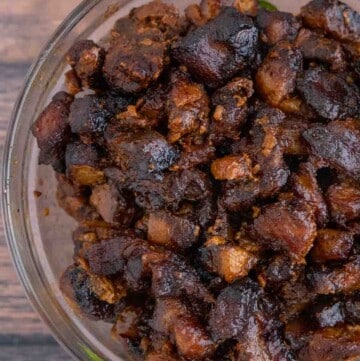
smoked pork belly burn ends with barbecue sauce in a glass bowl.

Smoked Pork Belly Burnt Ends

Chef Ryan Littley
Tender pork belly burnt ends coated with a flavorful dry rub and finished with a sticky, caramelized barbecue sauce. Make them in a smoker for authentic wood-smoked flavor or use the easy oven method included in the recipe notes.
5 from 34 votes
Prep Time 10 minutes
Cook Time 6 hours
Total Time 6 hours 10 minutes
Course Entree, sandwich
Cuisine American
Servings 6
Calories 889 kcal

Equipment

  • Electric Smoker or pellet smoker, propane smoker or charcoal smoker.
  • wood chips

Ingredients
  

  • 2 lbs pork belly -cut into 1½ to 2-inch cubes
  • 1 tablespoon kosher salt
  • 1 teaspoon white pepper -or black pepper
  • 1 teaspoon garlic powder
  • 1 teaspoon ground sage
  • 1 tablespoon olive oil -or your favorite oil
  • 1 cup barbecue sauce

Instructions
 

  • Preheat the smoker to 250°F. Add hickory, apple, cherry, or your favorite smoking wood.
  • Cut the skinless pork belly into approximately 1½-inch cubes and place them in a large bowl. Place them in a disposable aluminum pan.
  • Drizzle the pork belly with olive oil and toss to coat. Add the dry rub and toss again until the pieces are evenly seasoned on all sides.
  • Place the pan on the rack and smoke for 2½–3 hours, until the pork belly has developed a deep reddish-brown color and a flavorful bark.
  • Add the barbecue sauce and gently toss until the pieces are evenly coated.
  • Return the pan to the smoker, uncovered, and cook for another 1–2 hours, stirring once or twice, until the pork belly is very tender and the sauce is thick, sticky, and caramelized.
  • Check the larger pieces for doneness. A probe, skewer, or fork should slide into the meat with very little resistance. The internal temperature will typically be around 195–205°F, but tenderness is the best indicator of doneness.

Notes

Oven Method
Preheat the oven to 250°F. Line a rimmed baking sheet with foil and place a wire rack on top.
Prepare and season the pork belly as directed, then arrange the pieces on the wire rack with space between them. Roast for 2½–3 hours, until the fat has begun to render and the exterior is browned.
Transfer the pork belly to a baking dish or disposable aluminum pan, add the barbecue sauce, and toss to coat. Return the pan to the oven, uncovered, and cook for another 1–1½ hours, until the pork belly is very tender and the sauce is thick and caramelized.
For additional caramelization, place the finished burnt ends under the broiler for 1–2 minutes. Watch them carefully to prevent the barbecue sauce from burning.
The burnt ends are ready when a probe or fork slides easily into the meat with very little resistance. The internal temperature will generally be around 195–205°F.
 
Substitutions and Variations
  • Dry rub: Use your favorite barbecue rub or a homemade one. Sweet, smoky, and spicy seasoning blends all work well with pork belly. If you’re using a commercial rub, check the salt content before adding additional salt.
  • Barbecue sauce: Use your favorite. A Kansas City-style sauce will give you a sweeter, stickier coating, while a vinegar-forward sauce will help balance the richness of the pork belly.
  • Spicy burnt ends: Add cayenne pepper or chipotle powder to the dry rub, or use a spicy barbecue sauce for additional heat.
  • Smoking wood: Hickory gives pork belly a stronger traditional barbecue flavor, while apple and cherry woods provide a milder, slightly sweeter smoke.
  • Oven method: For additional smoky flavor when making these in the oven, add smoked paprika to the dry rub or use a smoky barbecue sauce. You can also add a very small amount of liquid smoke to the barbecue sauce, but use it sparingly.
 
Chef Tips for the Best Pork Belly Burnt Ends
  • Start with skinless pork belly: The skin won’t become crisp at the low temperature used for this recipe and can become tough and chewy.
  • Don’t cut the pieces too small: Cut the pork belly into approximately 1½-inch cubes. They’ll shrink as the fat renders, and larger pieces are less likely to dry out during the long cooking process.
  • Don’t over-trim the fat: The fat is an important part of pork belly and will slowly render as it cooks, keeping the meat moist, tender, and flavorful. Only trim unusually thick or hard areas of surface fat.
  • Give the pieces some room: Whether you’re using a smoker or the oven, leave space between the pork belly cubes during the first stage of cooking. Good airflow helps the exterior brown and develop a flavorful bark.
  • Wait to add the barbecue sauce: Let the pork belly develop its bark before adding the sauce. Saucing it too early can interfere with browning, and the sugars in the sauce can burn during a long cook.
  • Cook for tenderness, not just temperature: An internal temperature of 195-205°F is a useful guideline, but it’s not the final test. A probe, skewer, or fork should slide into the meat with very little resistance.
  • Let the sauce caramelize: During the final stage of cooking, the barbecue sauce should reduce and cling to the pork belly, creating a sticky, glossy coating rather than a thin layer.
 
Common Mistakes to Avoid
  • Cooking by time alone: Cooking times vary with the thickness and fat content of the pork belly. Use the suggested times as a guide and cook until the meat is tender and the fat has rendered.
  • Pulling the pork belly too soon: Pork belly can reach a high internal temperature before it’s properly tender. If a probe or fork still meets resistance, give it more time to cook.
  • Overcrowding the smoker or rack: Packing the pieces too closely together restricts airflow and can cause them to steam rather than develop a browned, flavorful exterior.
  • Using too much smoke: Pork belly readily absorbs smoke. A clean, steady smoke is all you need; heavy smoke can give the meat a bitter flavor.
  • Adding too much barbecue sauce: The goal is a sticky, caramelized coating, not pork belly swimming in sauce. Start with enough to coat the pieces and add more only if needed.
  • Walking away during the final stage: Once the barbecue sauce begins to reduce, its sugars can go from caramelized to burned quickly, especially if you finish the burnt ends under the broiler.
 
What to Serve with Pork Belly Burnt Ends
Pork belly burnt ends are rich, smoky, and slightly sweet, so I like serving them with simple sides that balance that richness. Serve them as an appetizer or make them part of a barbecue dinner with a few of your favorite sides.
  • Coleslaw: The cool, tangy crunch is a great contrast to the rich pork belly.
  • Macaroni and cheese: A classic barbecue side that’s always a crowd-pleaser.
  • Baked beans: Their sweet and savory flavors pair naturally with smoky barbecue.
  • Cornbread: Perfect for soaking up any extra barbecue sauce.
  • Pickles: Their acidity cuts through the richness of the pork belly.
  • Tacos: Add the burnt ends to warm tortillas with coleslaw, pickled onions, or your favorite taco toppings.
Party Pairing: Serve pork belly burnt ends with toothpicks as an easy barbecue appetizer. Keep them warm in a covered foil pan or slow cooker set to warm, with extra barbecue sauce on the side. For the best texture, serve them shortly after cooking rather than holding them warm for an extended period.
 
Beverage Pairings
  • Beer: A crisp lager, pilsner, or pale ale helps cut through the richness of the pork belly.
  • Cocktail: A bourbon-based Old Fashioned pairs well with the smoky, caramelized flavors.
  • Non-alcoholic: Unsweetened iced tea or sparkling water with lemon provides a refreshing contrast to the rich barbecue.
 
How to Store and Reheat Pork Belly Burnt Ends
Store leftover pork belly burnt ends in an airtight container in the refrigerator for up to 4 days. For longer storage, place them in a freezer-safe container and freeze for up to 2 months.
For the best results, reheat the burnt ends in a 325°F oven. Place them in a baking dish, add a small amount of barbecue sauce if they look dry, and cover loosely with foil. Heat for 10-15 minutes, then remove the foil and continue heating for a few minutes until the sauce is hot and sticky.
You can also reheat individual portions in the microwave, but the exterior will be softer. Heat them in short intervals until warmed through.
If frozen, thaw the burnt ends overnight in the refrigerator before reheating.
 
Recipe FAQs
Do I need to remove the skin from pork belly?
Yes. Skinless pork belly works best for burnt ends. At the low cooking temperature used for this recipe, pork skin won’t become crisp and can remain tough and chewy.
Can I make pork belly burnt ends ahead of time?
Yes, but they’re best shortly after they’re cooked. You can make them a day ahead, refrigerate them, and reheat them in a 325°F oven. Uncover them during the final few minutes to help restore the sticky, caramelized exterior.
QR Code

Nutrition

Calories: 889kcalCarbohydrates: 20gProtein: 15gFat: 83gSaturated Fat: 30gPolyunsaturated Fat: 9gMonounsaturated Fat: 39gCholesterol: 109mgSodium: 902mgPotassium: 397mgFiber: 1gSugar: 16gVitamin A: 123IUVitamin C: 1mgCalcium: 26mgIron: 1mg
Tried this recipe? Pin it for Later!Mention @askchefdennis or tag #askchefdennis!